
 Argentina (USD)
 Estados Unidos (USD)
Journal · Glossary
Aerocromía
ah·eh·ro·kro·MEE·ah · noun · plural: Aerocromías · also written “Aerochromy”
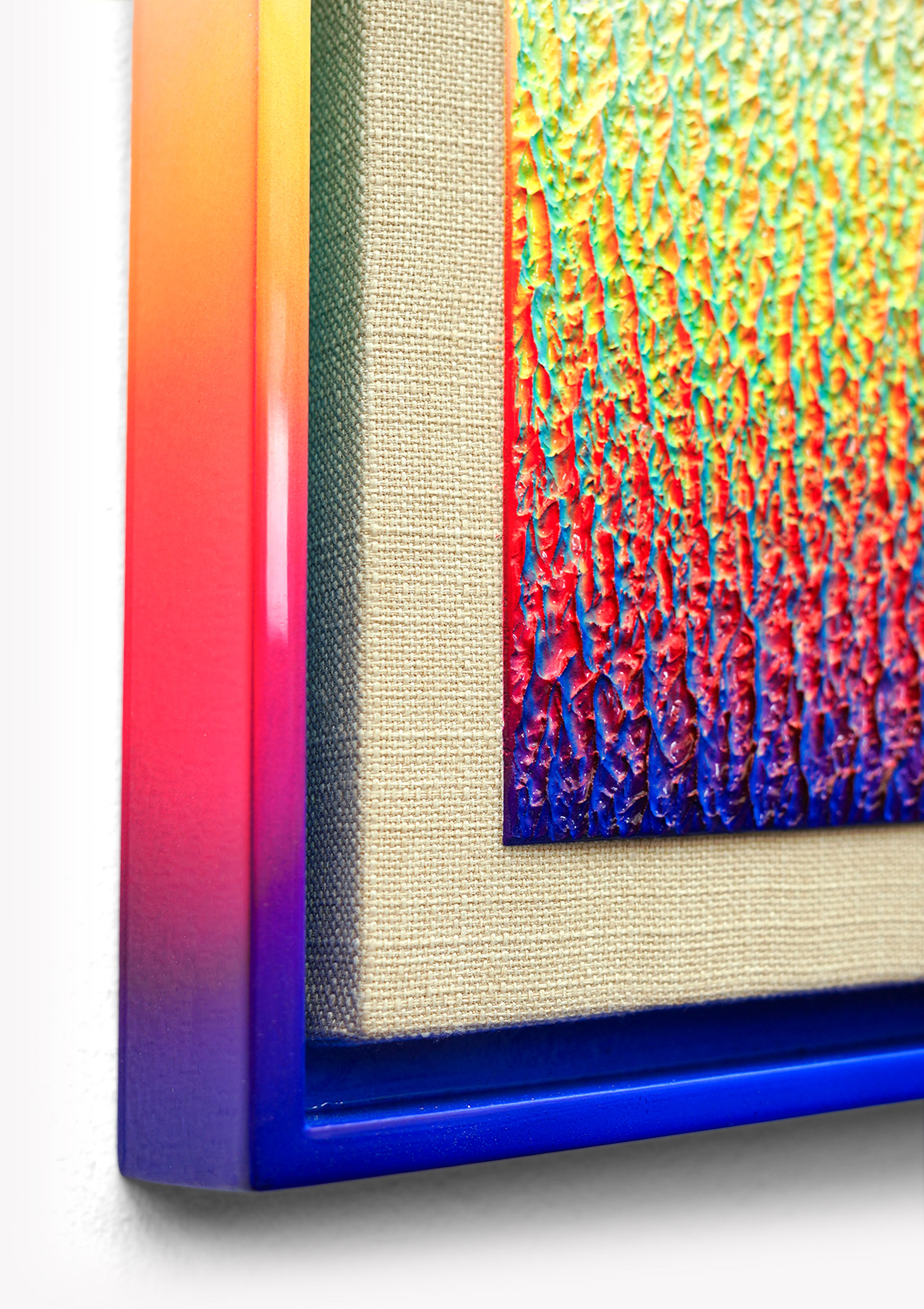
A painting technique created by Argentine artist Guido Llordi: paint projected with air onto three-dimensional reliefs, producing a physical color that changes with the light and with the position of the viewer.
- Coined by
- Guido Llordi, Argentine contemporary artist (Buenos Aires, 1979)
- Etymology
- Spanish aero (air) + cromía (quality of color)
- Technique
- Reliefs of textured pastes worked with a palette knife, airbrushed from opposing angles
- Effect
- Color transforms with the light and with the movement of the viewer
- Formats
- Painting, wall sculpture and kinetic work
- Where to see it
- Galería Llordi, Libertad 541, Buenos Aires · Monday to Friday, 2–6 pm, or by appointment
01Origin
The word was born from the need to name a process that traditional painting could not describe. Aero is the tool: air. Painting without touching the surface, the pigment settles like mist and follows the topography of the work. Cromía is the behavior of color: in an Aerocromía, color is not static; it depends on the physics of light.
The technique has its origin in the wall textures the artist’s grandfather worked with: an inherited craft that Llordi turned into a visual language.
02How it works
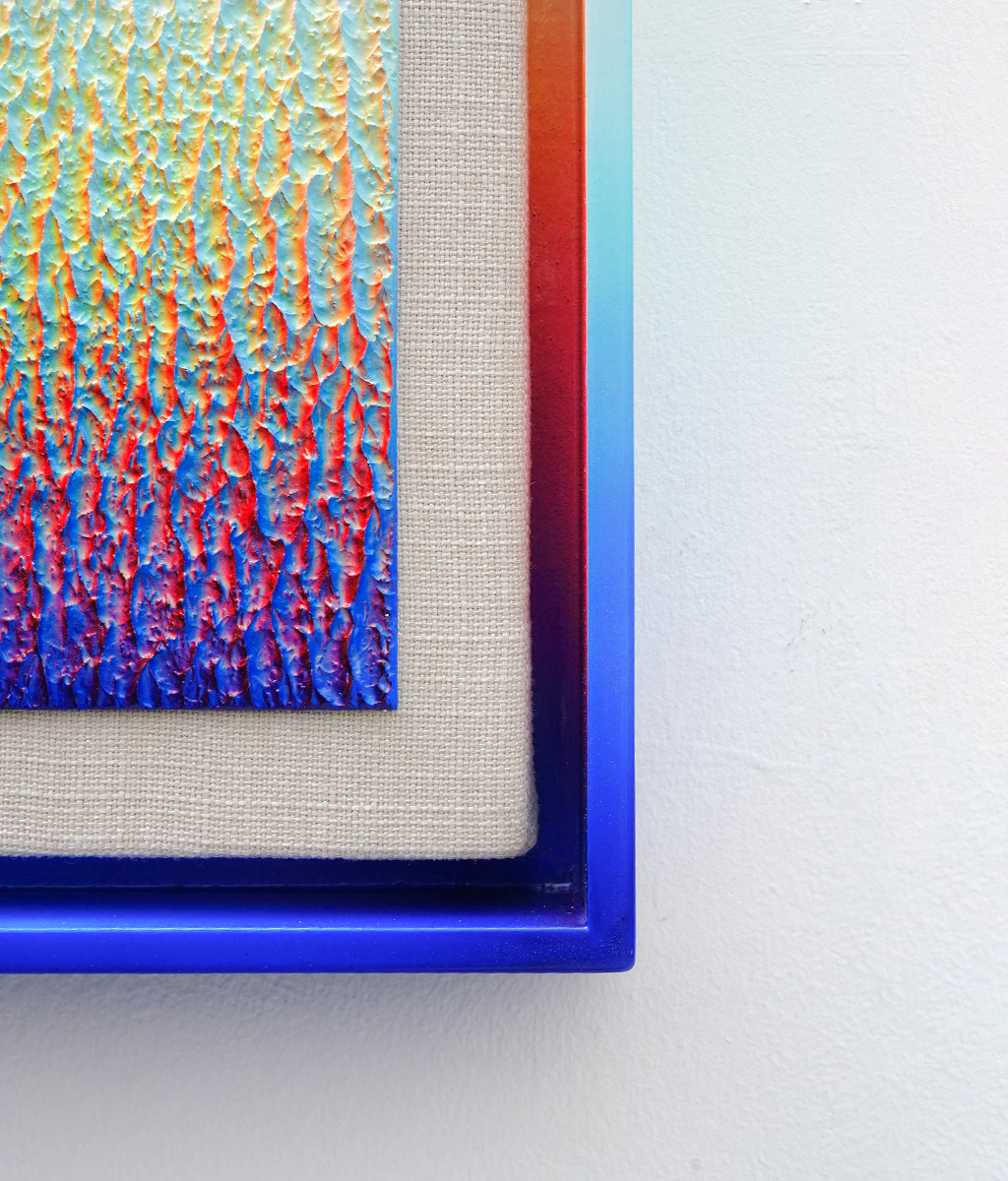
Projecting paint with air at specific angles onto a textured surface creates “slopes” of color. Each face of the relief receives a different color, and the work changes depending on where it is seen from.
An Aerocromía is not just an object to be looked at: it is a system that needs someone moving in front of it in order to reveal itself.
03From chance to control
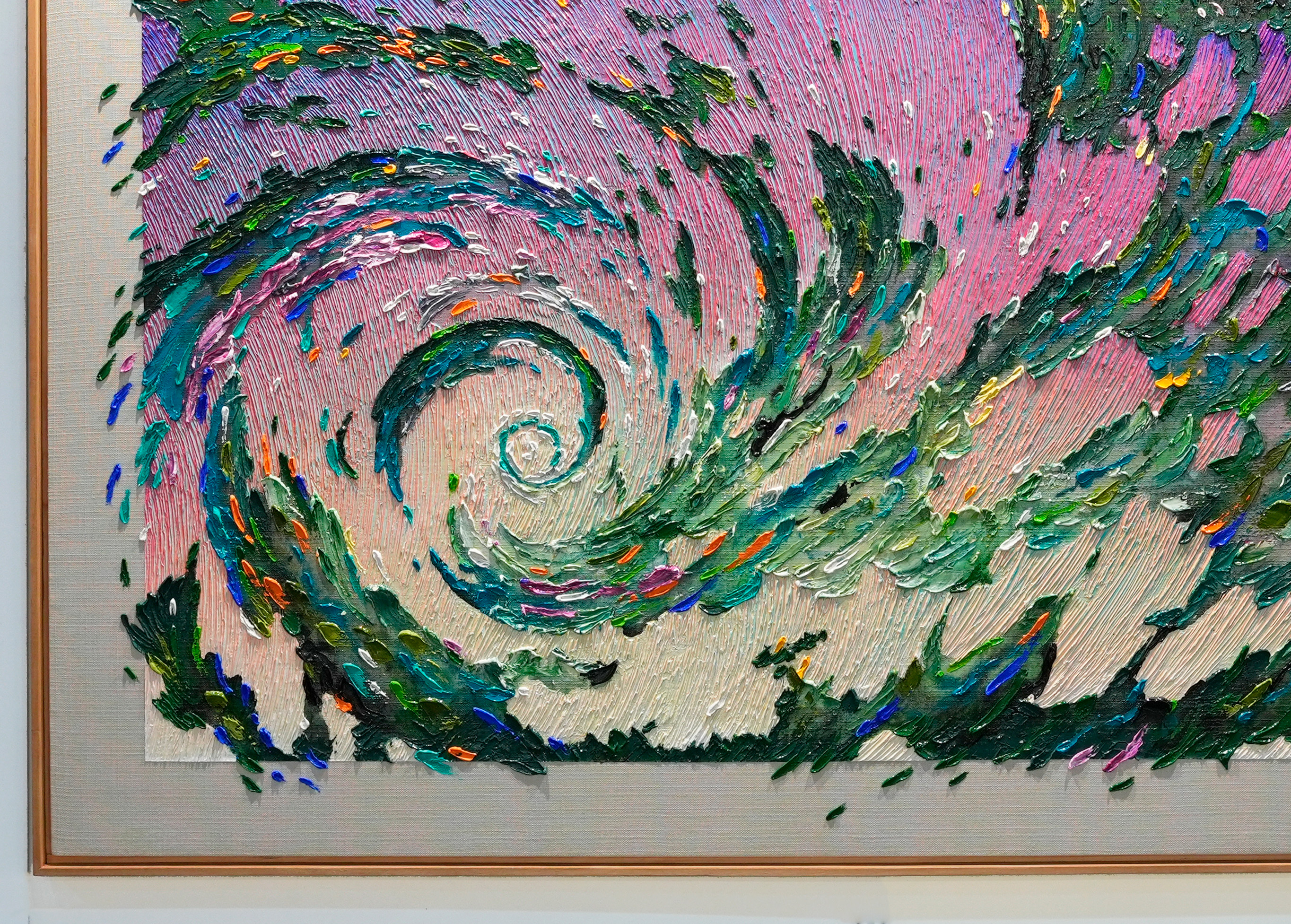
The works are built in layers. First, a base of fluid paint that obeys chance; then, a rigorous intervention with the airbrush. The volumes of the support catch the pigment the way mountain slopes catch the mist, creating micro-shadows and highlights that do not exist in flat painting.
04Materials and refraction
Pigments in semi-translucent layers and varnishes with different refractive indices. The controlled layering makes certain tones appear or disappear depending on how the light falls.
The result is a perceptual shift: looking at the work from the right is not the same as looking at it from the left. Color stops being a fixed quality and becomes a physical phenomenon that moves in real time.
05The work as a living system
“The viewer no longer looks: they play.”
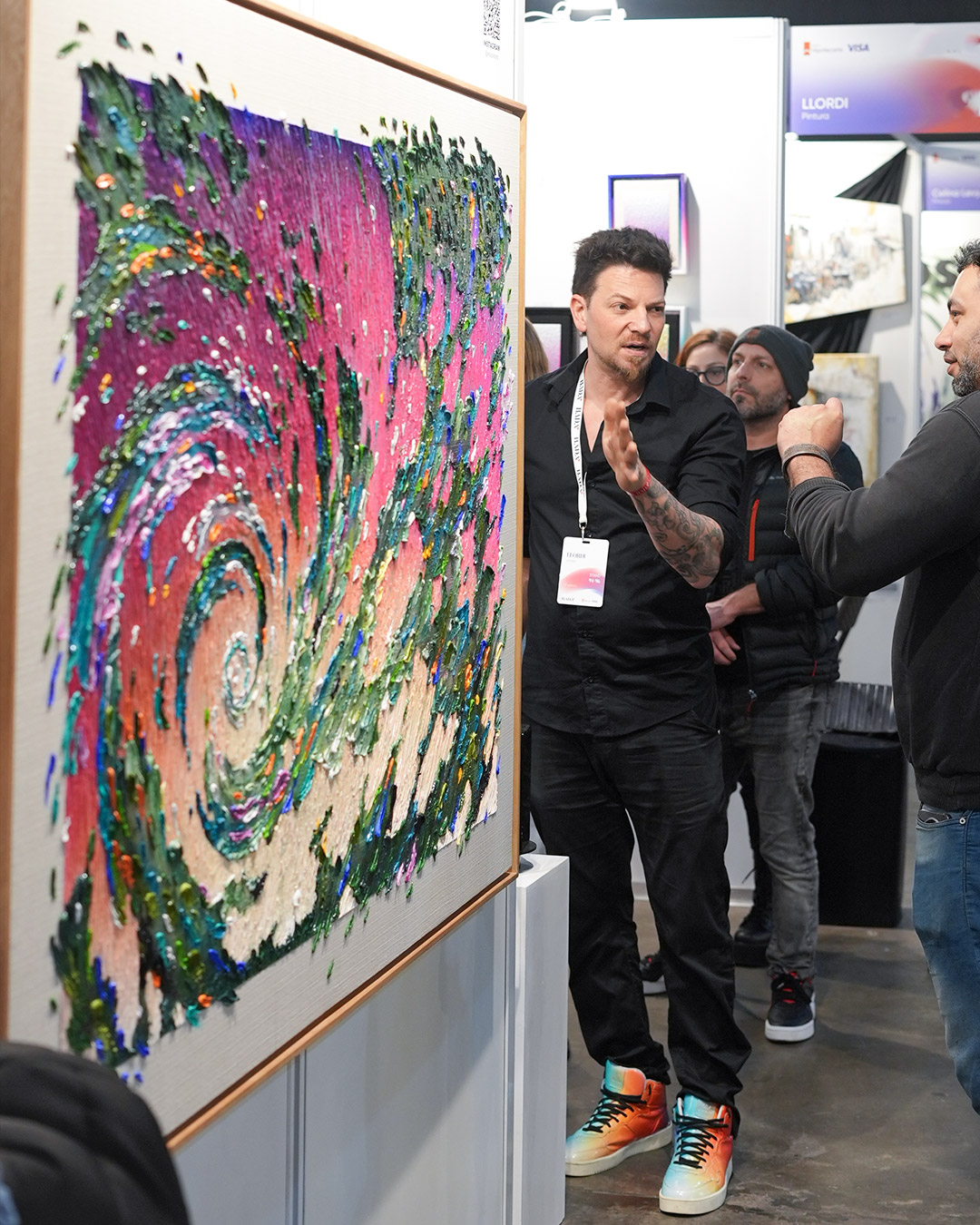
Llordi defines his work not as a set of static objects but as living systems that require the viewer’s interaction. The work acts as a social device: it invites people to move and play with perspective, and gives back, even if only for a moment, the gaze of someone seeing the world for the first time.
06Context
Works that respond to light bring time into painting as a variable: the image is no longer a single one, but a sequence that depends on the path of the viewer. Aerocromía engages with that search, which is why it appeals to collectors and curatorial spaces alike.
07Where to see Aerocromías
At Galería Llordi, the artist’s own space at Libertad 541, Buenos Aires, steps from the Teatro Colón and the Obelisco. It is a recommended stop for visitors exploring downtown Buenos Aires who are looking for contemporary art that responds to light and movement. Open Monday to Friday, 2 to 6 pm, or by appointment arranged via WhatsApp.
His work is represented internationally by bG Gallery (Santa Monica, United States), Fichandramous Gallery (London), Meeting-Art Gallery (Netherlands) and Gallery Boma (Mauritius), and is also available on Artsy.
08Frequently asked questions
What is an Aerocromía?
A work airbrushed onto a textured relief, whose color changes with the light and the position of the viewer. The term was coined by Argentine artist Guido Llordi.
Who invented Aerocromía?
Guido Llordi, a contemporary artist born in Buenos Aires in 1979, who named the technique and develops it from his studio in that city.
Why does an Aerocromía change color?
Because the airbrush deposits different colors on each face of the relief. As viewers move, they see different faces, and therefore different colors.
Can I buy an original Aerocromía?
Yes. Available works are listed at llordi.com.ar, with a certificate of authenticity signed by the artist and complimentary insured shipping worldwide.